Climate Change as a Lived and Mediated Reality for Citizens in Valladolid
© Janina Hahne
Climate Change as a Lived and Mediated Reality for Citizens in Valladolid
Work Package 4 (WP4) of CIDAPE explores climate boundaries in the following four countries: Austria, Norway, Slovakia, and Spain. I joined the ongoing project in November 2024. My academic background is in social and cultural anthropology, so I appreciated the explanations about the theoretical approach to climate boundaries at the beginning of my time at CIDAPE. Discussions with Dr. Florencia García-Rapp (WP3) and Till Hilmar, PhD (WP4), who explained the conceptualisation of research questions, helped me familiarise myself with the study context (the largest town in Castile and León, Spain), the methodology, and how to delve deeper into topics mentioned by participants during semi-structured interviews. While WP4's sociological contribution is to understand symbolic boundaries in the climate crisis (using Michele Lamont's approach, my doctoral thesis and data analysis follow the principles of grounded theory.
Thanks to pre-established contacts in the car industry, education, and the health sector, I soon met the first participants at the Faculty of Education and Social Work (FEyTS) on the Miguel Delibes Campus of the University of Valladolid (UVa) in Spain. Having arrived at the end of October 2024, I wondered how the locals navigated life in the city, how they felt about climate change, and how they adapted their behaviour in response to emerging challenges, initiatives, and future projections - or how they did not. By this time, it was starting to get colder but compared to polar regions, where melting ice caps change the landscape or other Spanish communities, residents of Valladolid had not recently experienced a local climate phenomenon that directly impacted their daily lives. How would they react to climate change if it implied slight transitions? Would urban citizens feel the effects, and how would they behave in response to global discussions about sustainability objectives?
Focus groups: between compassion and comprehension
The focus groups took place in April 2025, at an advanced stage of the project. It was interesting to observe how the discussion among the locals evolved and how they reacted to others' opinions. Seeing how they expressed comprehension and compassion and affirmed or countered arguments was intriguing. During all three sessions, citizens from various sectors and social backgrounds discussed climate change, personal decisions, responsibility, justice, fairness, emotions, and climate activism. Follow-up questions clarified particular stances and participants' opinions about others' explanations and personal experiences. These insights, as well as the personal, professional, and social experiences people shared, were interesting because of their potential to contrast public ideas with nuanced personal narratives. For example, it clarified how people felt included or excluded by sustainable objectives defining expectations for education and institutional responsibility.
I recognised the nuanced views that people shared about (e-)mobility and other topics, as well as the situations in which they deemed eco-friendly action possible, necessary, or not feasible. The sector-specific ideas about sustainable and polluting materials or processes were striking, as was the way people could affect change. They highlighted this in various ways, including emotional expressions such as hitting the table with their hands, opening their eyes wide, and shaking their heads. They also used metaphorical speech to reveal hints about their personal values, social objectives, and status-related concerns. This provided insight into the reality of people in Valladolid. What did the locals understand about the need to "give a grain of sand"?
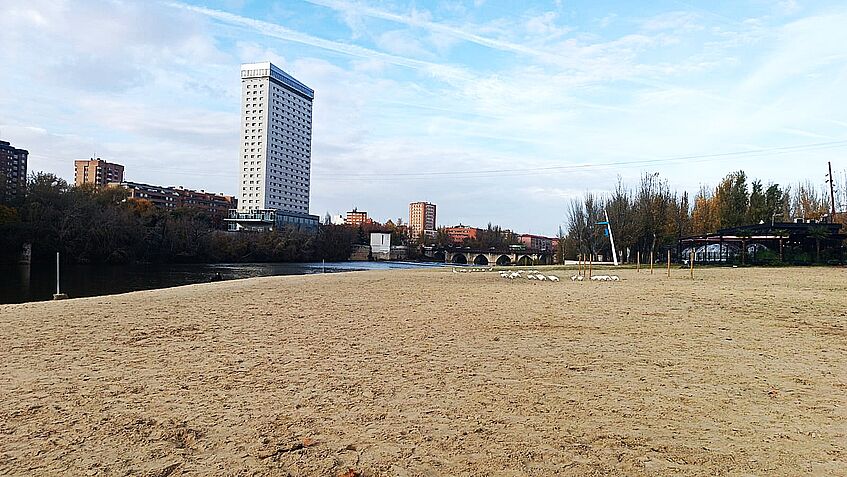
Other than the locals, the city was new to me. I had only seen parts of it, with its red brick houses, bicycle rental stations, and public electronic bicycle parking facilities. I saw people walking through parks and along the rivers, as well as through pedestrian and shopping areas. Some were waiting for the bus to arrive, while others waited for a gap in traffic. Thanks to the locals and their explanations, my initial impressions soon became more detailed and vivid. They elaborated on their experiences with mobility, their jobs, and life as local citizens. They also discussed how their actions would affect other people, places, and the climate. While my impressions only provided a momentary picture of life in the city, the perspectives of people who were raised and worked here - who have many years of experience with the varied seasons and decisions of new city councils - depicted much richer insights.
Although climate change was often discussed as a phenomenon that occurred far away, the locals also felt its effects when they faced new challenges in their households, neighborhoods, and workplaces. They recognised its impact while on vacation. In Valladolid, it became clearer how the urban environment matters to citizens, and this was evident in the way they interacted with and engaged with their surroundings. Activities such as walking by the river or through a park or taking weekend trips facilitated contact with nature in one way or another. How should people behave, and how should they not? Critique and appreciation are elements of social interaction. In public life, people's influence on others was sometimes limited to spontaneous, expressive encounters. For instance, they could suggest that others turn off their engines or walk a short distance instead of driving. Public spaces and people's habits are not static, but continuously adapted, reflective, and reworked. Some accepted new conditions for industries and users, while others rejected or doubted the implementation of the same measures, for instance, regarding the expansion of e-mobility. The variable and sometimes conflicting perspectives within a single town show me that CIDAPE's focus on citizen engagement as a tool and dynamic process for democratic action is crucial, especially when different societies are involved.
Reflecting climate education for younger generations
While climate change alters our environment, ideas about how to protect the climate are not only a matter of individual action or belief. For example, citizens of Valladolid noticed temperature changes throughout the year and realised that these changes affected their ability to adapt to extreme heat, prompting them to use air conditioning, for instance. The cold was especially difficult to manage in public schools and clinics due to a lack of resources. Teachers found that the heating systems should be improved for greater energy efficiency. During focus groups, participants also discussed how young protesters did not seem to consider alternatives to online shopping or driving short distances. Could teaching students about climate change cause them to distance themselves from the practical applications of the topic?
Those working in education hoped that nature activities and school gardens would raise awareness. Citizens in Valladolid also recognized that students learn from experiences in various environments. This could explain the uncertainty about which strategy is best. While intergenerational encounters revealed teaching staff's expectations for youth behaviour, they also shift the focus to adult behaviour. Adults often experienced routine lives and structured days. What would catch their attention in an urban environment?
In addition to experiencing different temperatures and adapting behaviourally and technically, people also mentioned the effects on well-being and health. For instance, doctors observed new allergies in their patients. Disruptive climate phenomena were related to other areas and communities. However, people were concerned about extreme weather events. The heavy rain that struck Valencia just a few weeks before the interviews in Valladolid began, reminded some people of when the Pisuerga River flooded. In this context, having a plan for how to protect oneself and others - including information about flood-risk areas and vulnerable communities - was crucial. Therefore, adapting to climate change involved taking responsibility for others, which resulted in emotional reactions to hypothetical, past, and possible future scenarios. Could the environmental effects of climate change influence openness to adopting sustainable solutions?
Hope in "giving a grain of sand"
The local people's feelings about events that occurred elsewhere depended on their family background, were intensified by media news, and were influenced by their experiences in other places. Although they all lived in and around Valladolid, some of their relatives resided in rural areas. Some stressed that extreme weather phenomena had a direct impact on the livelihoods of others in the agricultural sector. This could be seen as a kind of "schooling outside of school" and a means of raising awareness about the natural changes that occur when people travel and witness pollution or the regression of coastal areas. Offline experiences, such as being on vacation, combined multiple dimensions. These included the joy of being somewhere else, awareness of travel-related emissions, concerns about future scenarios, and the hope of making a small contribution, or "giving a grain of sand."
I found it striking that some people who advocated for action on behalf of nature rejected calls to action from activists, such as climate protests or Greta Thunberg's calls to action. Most adults acknowledged that digital activism would raise awareness among the youth. Could online platforms help us connect with the lived experiences of others? Could technology help us act and reconnect with nature? Nevertheless, motives regarding media consumption and expectations of media content are varied. Sometimes, people just want to be entertained. However, this also revealed the expectation that the news be engaging, as well as the critique of searching for credible means to stay informed when algorithms reveal what is interesting.
These insights are just a few of the many that citizens in Valladolid shared about their perspectives and experiences. Qualitative research is an ongoing process, and others might have come to different conclusions or asked different questions. Before working at CIDAPE, I conducted student research in parks and rural communities in the Amazon region. Seminars on social geography included, for instance, a student trip to Hamburg. These experiences sparked my interest in how people in cities might be affected by climate change, as well as how they act in response to their urban environments and sustainable objectives. I became interested in how they develop ideas and behave as community members.
© Janina Hahne
People relate to nature differently
The lives of citizens in Valladolid are embedded in complex patterns, and understanding the variety of their personal, professional, and social contexts is key. There are popular ideas about how the effects of climate change become visible, but particular experiences and responses reveal nuances in people's actions. Environmental imagery, including disasters, changing nature, and parks, was mentioned in relation to feeling safe. Such images travel through the media and are shared through social relationships. Some people enjoy being in nature because it is relaxing, but others associate nature in town with polluted air, extreme heat, and dirty green spaces. In response to these images and experiences, it is necessary to search for spaces where collective action is possible.
The people of Valladolid urged politicians to reorient regulations not only to address environmental change, but also to reflect the social and socioeconomic realities of their voters. There were barriers to coherent action. Pollution of urban green spaces prompted action, but it also left people disappointed and distrustful of others or humanity as a whole. From my work at CIDAPE and my insights into the lives of people in Valladolid, I learned that sharing experiences fosters a better understanding of the local impact of climate change, the meaning of sustainable action, and its importance to people. The reality of digital societies creates flexible connections with individuals and communities around the world, which is beneficial for inspiration but challenging due to misinformation and inconvenient truths.
How can we use this interconnectivity to build communities where people can act together, feel compassion, face deception, nurture hope, and share knowledge to find viable solutions to climate change scenarios?
Janina Hahne is a PhD researcher at CIDAPE where she collects ethnographic data in online communities and gathers data for a comparative analysis of climate boundaries. In her PhD thesis, she examines how social encounters and environmental experiences influence the attitudes of citizens in Valladolid.