When Citizens Talk About Climate Activism: Reflections from Deliberative Focus Groups in Italy
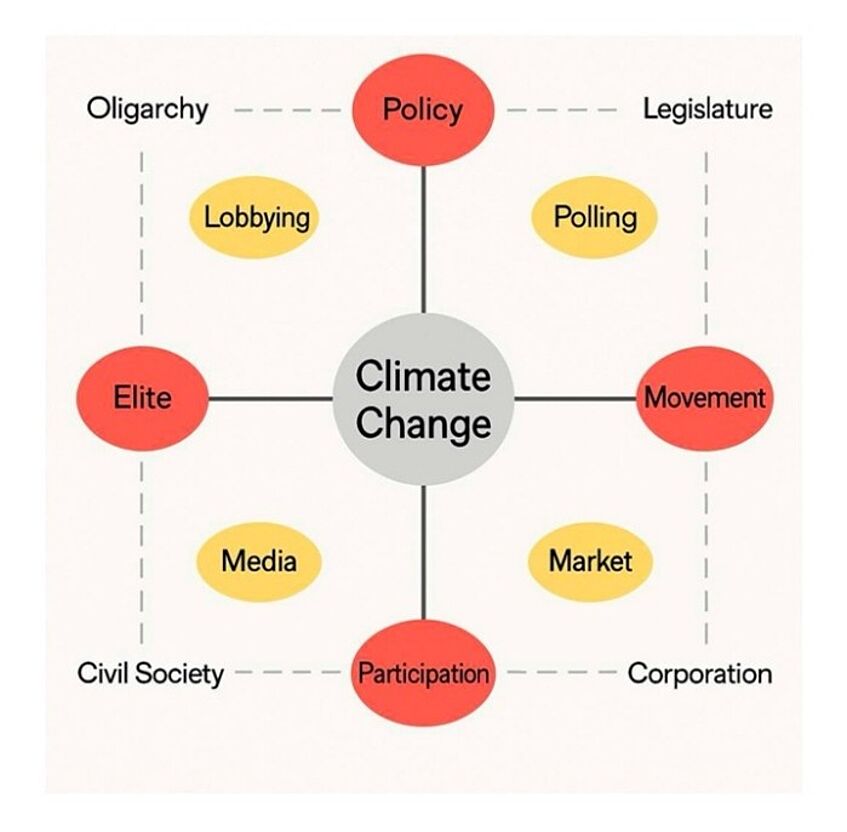
Figure 1: Participant-created diagram from focus group in Naples.
When Citizens Talk About Climate Activism: Reflections from Deliberative Focus Groups in Italy
How do ordinary citizens perceive climate activism? What do they think about protest strategies, responsibility for the climate crisis, and the role of political institutions? These were some of the questions explored through a series of deliberative focus groups conducted across several Italian cities. Participants were invited to discuss different protest scenarios related to climate change and reflect on the broader political and social dynamics surrounding environmental activism. The discussions produced a wide range of insights-not only about how people evaluate climate activism, but also about how they understand the climate crisis itself. Perhaps even more importantly, the focus groups revealed how valuable deliberative spaces can be for fostering dialogue and reflection on complex public issues.
From Environmental Issue to Political System
One particularly meaningful outcome emerged from the focus group in Naples. After the discussion ended, two participants shared a diagram they had drawn to represent how they now understood the politics of climate change. Their visualisation placed climate change at the centre of a broader system connecting political institutions, economic actors, social movements, media, and citizens. The diagram illustrates a key insight that repeatedly surfaced during the discussions: climate change is not perceived as an isolated environmental issue. Instead, participants frequently interpreted it as part of a complex political and economic system involving governments, corporations, markets, and civil society.
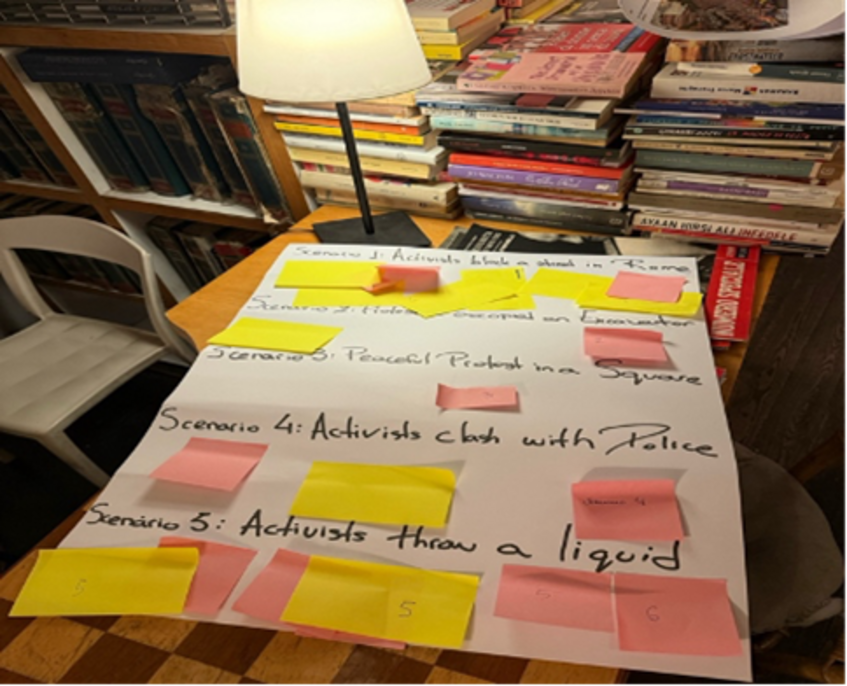
Figure 2: Voting results – Focus Group in Rome
For these participants, climate change is deeply embedded in broader structures of power, policy-making, and economic activity. Environmental activism therefore cannot be understood simply as a response to ecological problems: it also reflects wider tensions between institutions, social movements, and economic interests. What made this moment particularly interesting was that the diagram was not part of the research design. It emerged organically after the focus group had ended. The participants explained that the discussion encouraged them to continue thinking about the topic even after leaving the session. Their drawing became a way of summarising how the conversation had changed the way they conceptualised climate politics. Rather than seeing climate change as a single issue, they began to view it as a political field shaped by multiple actors and power relations. In this sense, the diagram captured how deliberation can transform the way people think about complex societal problems.
Emotions and the Climate Crisis
The discussions also revealed the emotional dimension of climate politics. Participants often described feelings of anxiety, frustration, anger and sometimes hopelessness when thinking about the future of the planet. Concerns about environmental degradation and the consequences for future generations were widely shared across the groups. These emotional responses were not simply abstract reactions to climate change as a global phenomenon. They were often connected to everyday experiences and perceptions of political responsibility. Some participants expressed anger toward institutions and corporations that they felt were not doing enough to address the crisis. Others described a sense of frustration or helplessness when considering the scale of the problem. At the beginning of many discussions, these emotions were often dominated by pessimism. Participants described the climate crisis as overwhelming and sometimes beyond the reach of individual or collective action.
However, as the conversations evolved, something interesting happened: the deliberative nature of the focus groups created a space where participants could openly exchange views, challenge each other's assumptions, and collectively reflect on possible responses. Through this process, the tone of the discussions often shifted. As participants moved from describing the problem to imagining possible actions or forms of engagement, feelings of hopelessness gradually gave way to a greater sense of agency. By the end of the sessions, participants often expressed a more optimistic outlook. The act of discussing climate change together-and exploring potential responses-appeared to reduce feelings of helplessness and replace them with a sense of collective possibility. This emotional shift highlights an important dimension of deliberative engagement. When people are given the opportunity to discuss complex and emotionally charged issues in a supportive environment, they may move from passive concern toward a more active sense of involvement.
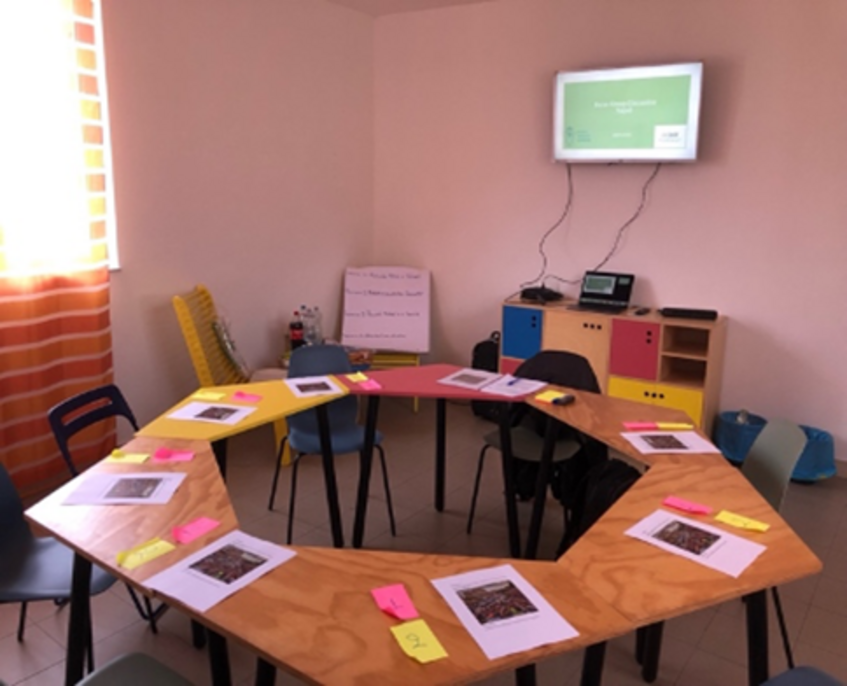
Figure 3: Focus Group in Naples
The Value of Deliberative Spaces
One of the most striking findings from the focus groups was the feedback participants gave about the process itself. Many emphasised that opportunities to openly discuss complex political and social issues-especially climate change-are rare in everyday life. Several participants noted that while climate change is widely discussed in the media and political debates, there are few spaces where citizens can sit together, exchange perspectives and reflect collectively on the issue. For many, the focus groups provided exactly this type of environment.
The deliberative format encouraged participants to listen to different viewpoints, explain their own positions, and reconsider some of their initial assumptions. The conversations were not simply about expressing individual opinions; they became a process of collective reflection. Participants repeatedly expressed appreciation for having a space where they could speak freely, interact with others and engage in thoughtful dialogue. This openness allowed individuals with different backgrounds and perspectives to interact in ways that are rarely possible in everyday political discussions. In this sense, the focus groups functioned not only as a research method but also as a small experiment in democratic engagement. They demonstrated how structured deliberation can create opportunities for citizens to actively participate in discussions about complex political and social challenges.
Thinking Beyond the Discussion
The diagram created by the participants in Naples captures the broader impact of these conversations. By placing climate change at the centre of a network of political, economic, and social actors, the drawing reflects the systemic understanding that emerged through discussion. More importantly, it shows how deliberation can extend beyond the moment of the conversation itself. Participants continued reflecting on the issues after the session ended, rethinking the relationships between activism, institutions, and society. In a time when climate debates are often polarised or fragmented, creating spaces where citizens can deliberate together may be more important than ever. These focus groups demonstrated that when people are given the opportunity to discuss complex issues collectively, they do not simply express opinions-they begin to rethink the broader systems that shape the climate crisis and the possibilities for addressing it. The conversations showed that deliberation does more than collect opinions. It can foster reflection, encourage dialogue across differences, and help participants develop new ways of understanding the challenges they face. In the case of climate change, this kind of engagement may be an essential step toward building more inclusive and informed public debates about the future of the planet.
Nikos Saridakis is a Research Fellow at the Scuola Normale Superiore and a Research Associate at the Center for Political Research - Panteion University. His research focuses on far-right politics, social movements, online extremism and hate speech. In CIDAPE, he conducts research for Work Package 6.