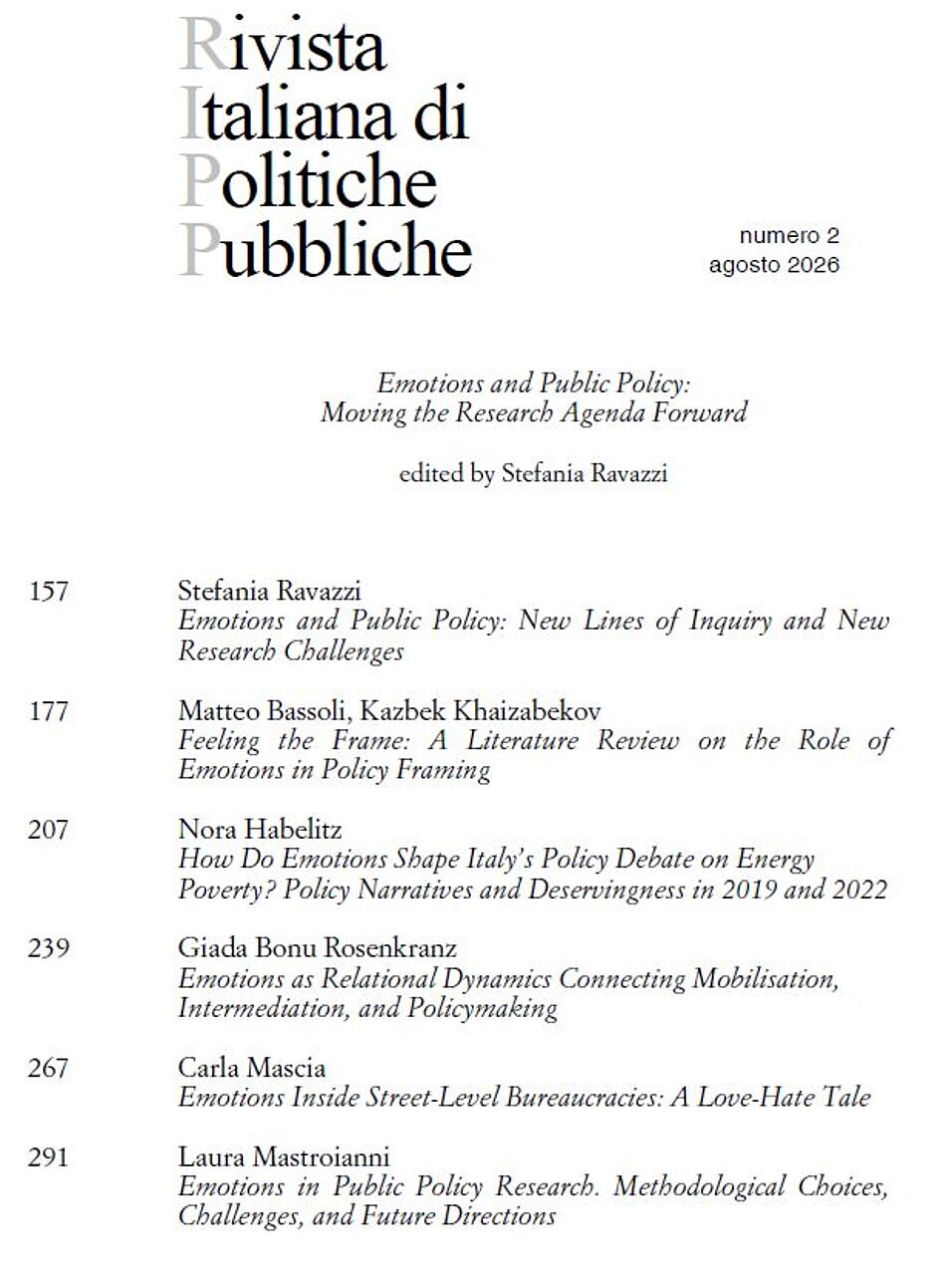
She finds that policy narratives in both periods focus on those affected by energy poverty as narrative victims. However, who counts as a victim, and how they were portrayed, changed with the expansion of the policy problem in the energy crisis. This can be seen in policy actors narrative strategies and the discrete emotions evoked:
In 2019, energy poverty was rarely discussed. The 2019 narratives can be interpreted as means of agenda setting and problem definition and focused on 'energy-poor' people, evoking compassion, suffering, fear and dismay.
In the context of the 2022 energy crisis, attention to the issue had broadened, reflected in higher levels of emotionalisation and narrativity. Here, it was 'average citizens' who were at the centre of the discussion and were characterised by more positive emotions, such as affinity and compassion, alongside negative ones.
Nevertheless, policy solutions often portrayed energy consumption as an individual responsibility and called into question citizens' deservingness to policy support.
Overall, the findings point to an expansion in the scope of the policy problem and a parallel intensified emotionalisation of affected groups, with distinct narrative strategies characterising each period.
https://www.rivisteweb.it/isni/82053